The Ivan Saltzman most people are searching for when they type 'ivan saltzman net worth' is Ivan Saltzman, the South African co-founder of Dis-Chem Pharmacies, one of the largest retail pharmacy groups on the Johannesburg Stock Exchange. Based on publicly disclosed shareholding data and JSE market pricing, the Saltzman family's combined stake in Dis-Chem was valued at over $630 million as of late December 2025. Ivan's personal beneficial interest, held primarily through the investment vehicle Ivlyn Local Investment Holdings (Pty) Ltd, represents the core of that figure, though the exact personal slice depends on how the June 2025 family restructuring distributed shares across heirs and trusts. A credible personal net worth estimate for Ivan Saltzman, accounting for known share sales, the R500 million property disposal, and cash received from a R1.4 billion share sale in early 2024, places him comfortably in the range of $400 million to $600 million as of mid-2026, with Dis-Chem equity being by far the dominant asset.
Ivan Saltzman Net Worth: Best Estimate and How It’s Derived

Who is Ivan Saltzman?

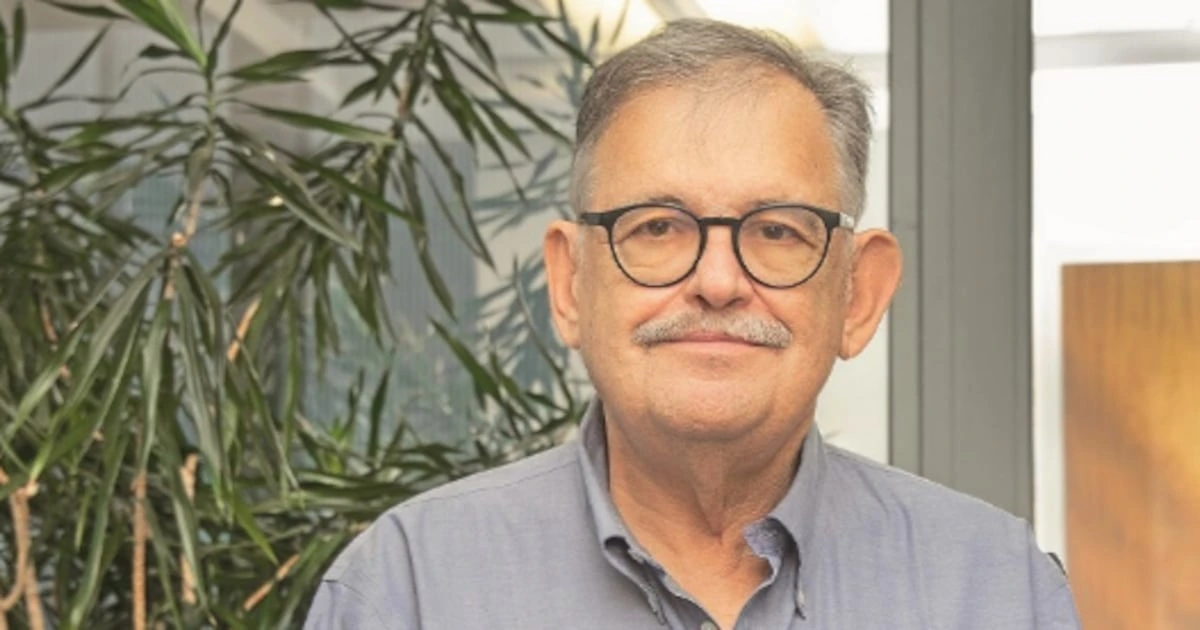
Ivan Saltzman co-founded Dis-Chem Pharmacies with his wife Lynette Saltzman in 1978, starting with a single pharmacy in Midrand, South Africa. Over the next four decades he grew the business into a national retail pharmacy chain with hundreds of stores, a significant private-label health and beauty business, and substantial distribution infrastructure. He served as CEO of the group for much of that period before transitioning to an executive director role, and blank" rel="noopener noreferrer">announced plans to retire from the board entirely in 2026. His career highlight, by his own account, was taking Dis-Chem public on the JSE in November 2016, an event that converted decades of private equity into publicly tradeable, market-priced wealth.
It's worth flagging the name ambiguity upfront. There are other people named Ivan Saltzman, including professionals in medicine and law in various countries. If you arrived here from a general search, the wealth-linked Ivan Saltzman is definitively the South African pharmacist-turned-billionaire, confirmed by Competition Tribunal filings, JSE SENS announcements, and mainstream South African business media. The ownership trail from Ivan Saltzman to Dis-Chem equity runs through Ivlyn Local Investment Holdings, a vehicle that appears by name in formal legal documents including South African Competition Tribunal case records.
The most credible net worth figure, and how to read it
No institution publishes an audited personal net worth for Ivan Saltzman. What exists instead is a set of verifiable public signals: JSE beneficial ownership disclosures, SENS restructuring announcements, director dealings filings, and reported transaction values. Working from those signals, here is where the number comes from.
As of December 30, 2025, reporting anchored to JSE market data placed the Saltzman family's total Dis-Chem stake at over $630 million. That figure is a family aggregate, not Ivan's personal slice alone. blank" rel="noopener noreferrer">The June 20, 2025 SENS announcement described a restructuring in which 217,125,386 ordinary Dis-Chem shares were distributed within the Saltzman family from the Ivlyn vehicle. At Dis-Chem's JSE price around that period, those shares alone represented several hundred million rand in equity being reallocated. Additionally, Ivan Saltzman sold approximately R1.4 billion in Dis-Chem shares in early 2024, and the founders sold their head office and Midrand distribution centre to the Dis-Chem group for roughly R500 million around the same period. Both transactions converted equity or property into cash, adding liquid assets to the picture.
Putting those signals together, a defensible personal net worth range for Ivan Saltzman as of mid-2026 is roughly $400 million to $600 million (approximately R7.5 billion to R11 billion at current exchange rates), weighted toward the lower end if the June 2025 share restructuring transferred significant value to the next generation, and toward the upper end if a large residual beneficial interest remains in his name. This is not a precise audit. It is the most honest, methodology-transparent estimate you can build from public data.
Where the money actually comes from

Dis-Chem equity: the primary wealth engine
Ivan Saltzman's wealth is, almost entirely, a Dis-Chem story. The family built the business privately over 38 years before listing it on the JSE in 2016. At the point of the IPO, the Saltzman family retained a controlling majority stake through Ivlyn Local Investment Holdings, meaning the listing created an immediately measurable, market-priced fortune rather than transferring ownership. Every subsequent movement in Dis-Chem's share price moves the headline wealth figure. When Dis-Chem shares rise on the JSE, wealth trackers report higher family net worth; when they fall, the figure drops. This is the mechanism behind the $630 million-plus figure cited in December 2025 reporting.
Salary and executive compensation

As a founder-CEO and later executive director of a listed company, Ivan Saltzman received executive remuneration disclosed in Dis-Chem's integrated annual reports. The amounts are consistent with South African listed-company executive pay and are meaningful on their own, but they are a rounding error relative to his equity stake. Over his tenure, cumulative salary and bonus income likely added tens of millions of rand to his liquid wealth, but this is not the driver of his net worth profile.
Property and real estate income
Before the 2024 sale, the Saltzman family trust owned Dis-Chem's head office and Midrand distribution centre, effectively charging the business rent for use of founder-controlled property. The 2024 disposal of those premises to the Dis-Chem group for approximately R500 million was a significant liquidity event, converting what had been income-generating property into a cash lump sum. This transaction is documented in contemporaneous business reporting and represents a clean, verifiable addition to Ivan Saltzman's liquid asset base.
Share sales

The R1.4 billion share sale in early 2024 is the largest single documented liquidity event. Director dealings disclosures on the JSE, which are mandatory for listed-company insiders, provide the share quantities, sale prices, and dates. This kind of public filing is exactly the primary source you want to anchor a net worth analysis to, because it shows real cash received, not just paper equity.
Asset breakdown
| Asset Category | Estimated Value / Description | Primary Evidence |
|---|---|---|
| Dis-Chem equity (via Ivlyn/trusts) | $400m–$580m (family aggregate above $630m; personal slice post-2025 restructuring lower) | JSE SENS filings, Dec 2025 market reporting |
| Cash from share sales | Director dealings / Business Day reporting | |
| Cash from property sale | Satori News, Business Day (Jan 2024) | |
| Other real estate | Likely privately held residential and commercial property; not publicly disclosed in detail | No primary source; inferred |
| Other investments / vehicles | Private holdings probable given family wealth scale; no public filings detail these | No primary source; inferred |
The honest answer on assets outside Dis-Chem equity is that there is limited public data. High-net-worth South Africans of this profile typically hold diversified portfolios including offshore investments, private equity interests, and residential real estate, but none of those are subject to JSE disclosure requirements. The figures you can verify are the Dis-Chem equity value, the two major 2024 cash events, and the executive remuneration line in annual reports. Everything else is inference.
Financial timeline: how wealth built up over time
- 1978: Ivan and Lynette Saltzman open the first Dis-Chem pharmacy in Midrand. Wealth at this stage is tied entirely to the private business, with no external valuation.
- 1978–2016: Dis-Chem expands to a national chain across South Africa. The family retains full ownership through Ivlyn Local Investment Holdings. Wealth grows with the business but remains illiquid and unverifiable by outsiders.
- November 2016: Dis-Chem lists on the JSE. This is the defining financial milestone. The IPO creates a publicly priced fortune for the first time, and the Saltzman family's retained controlling stake is immediately translatable into a market-cap-linked net worth figure.
- 2016–2023: Post-IPO growth in Dis-Chem's share price and store footprint increases the paper value of the family's stake. Ivan Saltzman serves as CEO, then transitions to executive director, maintaining both a salary and his equity interest.
- June 4, 2023: Ivan Saltzman publicly reflects on the 2016 IPO as his career highlight in Business Day interview, signaling a gradual transition away from day-to-day leadership.
- January–February 2024: Two major liquidity events occur near-simultaneously. Ivan Saltzman sells approximately R1.4 billion in Dis-Chem shares. Separately, the Saltzman family trust completes the sale of Dis-Chem's head office and Midrand distribution centre to the Dis-Chem group for approximately R500 million. Combined, these events move a significant portion of wealth from equity/property into cash.
- June 20, 2025: Ivlyn Local Investment Holdings announces a restructuring involving the distribution of 217,125,386 ordinary Dis-Chem shares within the Saltzman family. This is a generational wealth transfer mechanism rather than a sale, and it shifts how much of the Dis-Chem stake is attributed to Ivan personally versus to heirs and trusts.
- December 30, 2025: Media reporting places the total Saltzman family Dis-Chem stake above $630 million following JSE gains.
- 2026: Ivan Saltzman announces retirement from the Dis-Chem board. This is a governance milestone rather than a wealth event, but it changes the nature of his income going forward from executive pay to purely investment returns.
How to verify or update this estimate yourself
If you want to build or update this estimate with current data, the methodology is straightforward. The primary sources are public, free to access, and more reliable than any net worth aggregator website.
Step-by-step verification approach
- Go to the JSE SENS database (sens.co.za) or ShareNet and search for 'Dis-Chem' or 'Ivlyn'. Look for the most recent director dealings disclosures and beneficial interest announcements. These filings list the number of shares held by the Saltzman family through Ivlyn and any associated trusts, with the date of the disclosure.
- Find the current Dis-Chem share price on the JSE (ticker: DCP). Multiply the disclosed beneficial interest share count by the current price to get a market-cap-linked equity value. This is the core of any credible estimate.
- Check the USD/ZAR exchange rate at your chosen 'as-of' date to convert the rand figure into dollars, since most international net worth comparisons use USD.
- Search Dis-Chem's most recent Integrated Annual Report (available at Dis-Chem's investor relations page or sharedata.co.za) for the 'shareholding by directors and prescribed officers' table. This confirms the beneficial interest percentage held via Ivlyn.
- Cross-check any reported share sales or transfers against the SENS director dealings feed. Each sale or transfer changes the baseline share count and therefore the equity value.
- Look for SAFLII (South African Legal Information Institute) records if you need to confirm the legal control chain from Ivan Saltzman through Ivlyn to Dis-Chem. Competition Tribunal documents explicitly describe this structure.
Red flags to watch for
- Net worth figures that don't cite a valuation date: share prices move daily, so any figure without a specific 'as-of' date is meaningless for verification.
- Estimates that don't distinguish between the family aggregate stake and Ivan's personal beneficial interest. The June 2025 restructuring changed the distribution of shares within the family.
- Dollar figures without a stated exchange rate: ZAR/USD fluctuates significantly, and a R10 billion figure can translate to anywhere from $500 million to $600 million depending on the rate used.
- Articles that list 'net worth' figures sourced only from other net worth aggregator websites rather than JSE filings or primary reporting. These figures recycle each other without updating.
- Claims about undisclosed assets like yachts, art, or offshore accounts that have no primary source. Treat these as unverified unless a specific public document supports them.
What this number can't tell you
A net worth estimate is a snapshot of the gap between assets and liabilities at a moment in time, and even that snapshot is partial. For Ivan Saltzman, the publicly verifiable portion of wealth is heavily concentrated in a single listed stock. That creates volatility: a 20% decline in Dis-Chem's share price would erase over $100 million from the headline figure without any real-world change in Ivan Saltzman's lifestyle or financial security. Conversely, a strong JSE rally inflates the number equally artificially.
There are also things the public record simply doesn't capture. Liabilities are almost never disclosed for private individuals. If the Saltzman family has borrowed against their equity stake (a common strategy for the ultra-wealthy to access liquidity without triggering a taxable sale), the gross equity figure overstates net wealth. Private investments, offshore holdings, life insurance structures, family trusts with discretionary distributions, and philanthropic commitments are all potential adjustments that don't appear in any JSE filing.
The June 2025 share restructuring illustrates a related limitation: wealth estimates based on shareholding data become less precise after intergenerational transfers, because the beneficial interest is now spread across family members and trusts rather than sitting cleanly in one person's name. The 'Ivan Saltzman net worth' figure post-2025 is inherently fuzzier than it was pre-restructuring, even though the family's combined wealth may be unchanged. Ivan Savvidis net worth is often discussed with similarly large, publicly hard-to-audit stakes and reliance on reported deals rather than audited personal statements.
For context, profiles of other entrepreneur-investors like Ivan Savvidis and Ivan Urgant face similar challenges: a large portion of wealth tied to one industry or one country's market, with limited international disclosure requirements, makes precise personal net worth estimates a matter of informed estimation rather than audited fact. Founder-wealth profiles like Jonas Bevacqua's LRG clothing stake follow the same pattern, where the public record gives you a framework but not a final answer.
The most honest way to use a figure like '$400 million to $600 million' is as an order-of-magnitude anchor, not a bank balance. It tells you Ivan Saltzman is a billionaire-adjacent figure whose wealth was built through a single transformative business venture over four decades, converted to measurable market value through a 2016 IPO, and partially liquefied through two major 2024 transactions. If you are also searching for Jonas Bevacqua net worth, his public stake-based estimates run into similar limitations billion-adjacent figure. That narrative, grounded in public filings, is more useful than any single number. If you are also wondering what Avicii's net worth was, his story follows a very different music-and-touring wealth path than Ivan Saltzman's equity-driven one.
FAQ
Why do net worth estimates for Ivan Saltzman change even if nothing personal happens?
Because most of the publicly traceable value is tied to Dis-Chem’s JSE share price. When the stock moves, the “equity value” portion of a wealth estimate moves automatically, even if Ivan has not sold or bought anything. That means headlines can swing with market volatility rather than real changes to lifestyle or spending.
Does the $400 million to $600 million range represent Ivan personally, or the family stake?
The family’s disclosed Dis-Chem stake is the most verifiable input, and Ivan’s personal slice depends on restructuring outcomes, beneficial interest distribution, and how holdings are allocated across heirs and trusts. The estimate range is meant to reflect that uncertainty, not to claim a precisely measured single-owner figure.
How do share restructurings (like the June 2025 distribution) affect accuracy?
They reduce precision because beneficial ownership becomes spread across multiple family members and vehicles. Even if the family’s combined value is stable, the estimate for “Ivan specifically” becomes fuzzier because fewer shares can be cleanly attributed to one individual at market value.
If Ivan sold shares in early 2024, why isn’t his net worth estimate automatically higher and clearly capped?
Share sales convert equity into cash, but the estimate also depends on the value of any remaining Dis-Chem holdings and on the market price after the sale. If Dis-Chem later falls, the value of residual holdings can offset the cash increase, keeping the overall range wide rather than moving in one direction.
What’s the difference between gross equity value and actual net worth for someone like Ivan Saltzman?
Gross equity value treats the shareholding as if it were fully owned free and clear. Real net worth subtracts liabilities, which are often not publicly itemized for private individuals. If loans exist that are secured against the stake, the headline equity value can overstate what “net” wealth is after debt.
Should I trust net worth aggregator websites for Ivan Saltzman?
For this specific case, you generally get more reliable results by building from JSE filings and disclosed transaction values, then treating any final number as an estimate with uncertainty. Aggregators often lack a transparent mapping from specific beneficial ownership to personal share count after restructures and therefore can bake in assumptions you cannot verify.
How should I interpret the R500 million property disposal mentioned for the 2024 period?
Treat it as a liquidity event, not necessarily a pure increase to long-term net worth. The cash received may be partially offset by taxes, reinvestment, family distributions, or later changes in other assets. Also, property disposed by a trust or vehicle may not translate 1:1 into “Ivan personal” cash without tracing the beneficial interest and subsequent allocation.
What time “as of” date should I use when comparing different Ivan Saltzman net worth numbers?
Pick a consistent measurement date, ideally aligned to public shareholding snapshots or specific filing dates. Estimates produced at different points in time can be incomparable because the market price of Dis-Chem shares is the dominant driver of the equity-based portion.
Can a person be a billionaire-adjacent figure even if their reported number is only a few hundred million dollars?
Yes, especially when wealth is concentrated in one volatile stock. If Dis-Chem trades higher at some point, the same shareholding can push an estimate closer to billion territory, and if it trades lower the estimate falls quickly. That’s why ranges are more defensible than single-point claims.
Are executive salary and bonuses meaningful for Ivan Saltzman’s wealth compared to Dis-Chem equity?
Usually they are not the main driver. For founder-heavy listed stakes, compensation is typically smaller relative to the market value created and retained through holdings. The article’s core point is that equity value movements dominate the net worth profile.