
Voltaire, the pen name of François-Marie Arouet (1694–1778), was almost certainly one of the wealthiest writers of his era. The best defensible estimate of his net worth at peak, drawing on his lottery windfall, publishing income, Prussian salary, annuity arrangements, and property at Ferney, puts him somewhere in the range of 1 to 2 million livres in accumulated wealth by the 1760s and 1770s. Converting that to modern purchasing power is genuinely difficult, but rough estimates place it in the equivalent of several million to tens of millions of U.S. dollars today, depending on the conversion method used. That range is wide on purpose: the honest answer is that we can document the sources and the general scale, but not an exact figure. If you are looking specifically for James Verrillo net worth, this site’s approach is similar: start with documented income and assets, then use cautious estimates rather than a single “confirmed” figure.
Voltaire Net Worth Estimate: Wealth, Sources, and Limits

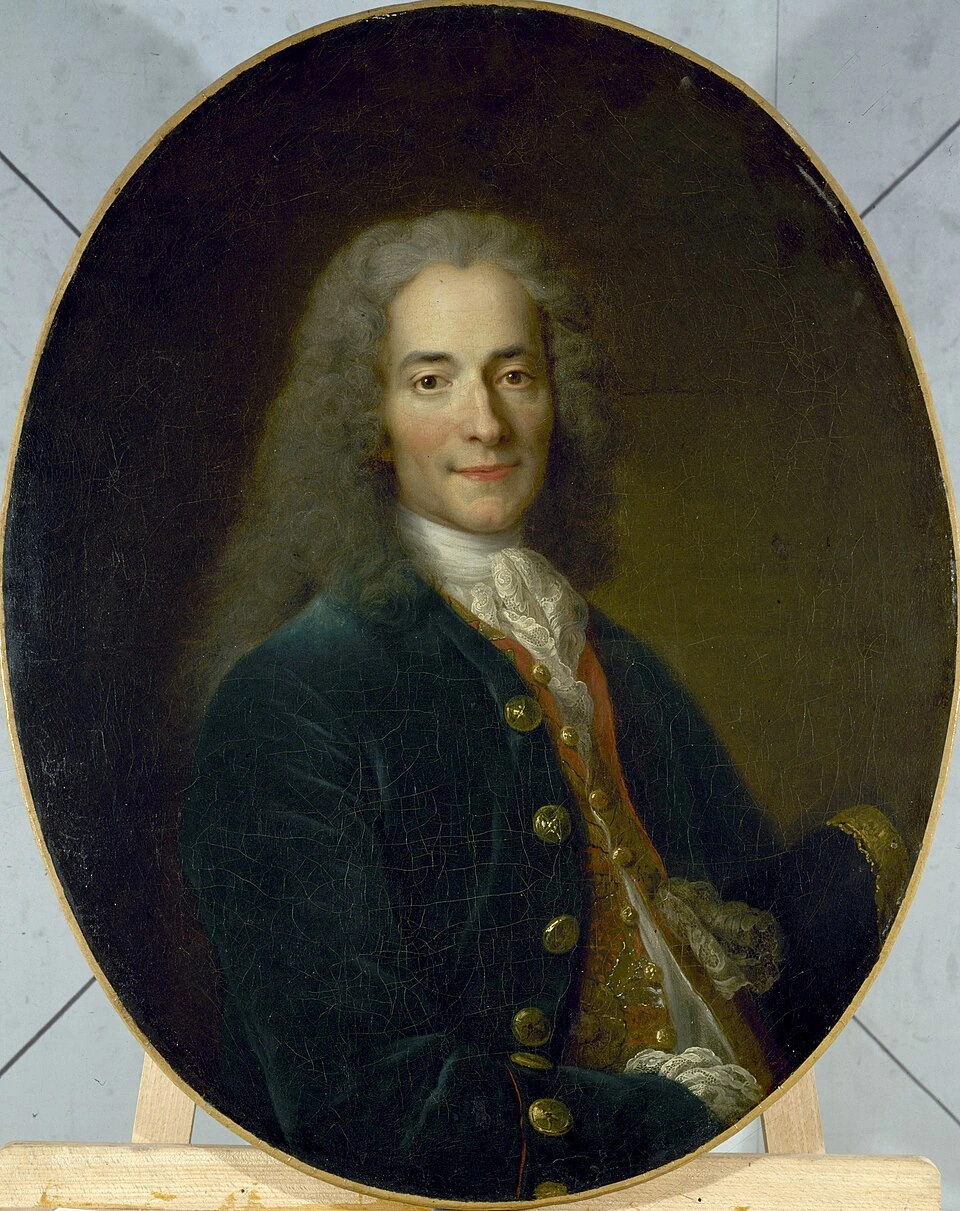
Who Voltaire was and why putting a number on his wealth is complicated
Before getting into the numbers, it helps to be clear about who we are talking about. This article profiles Voltaire the historical philosopher and writer, not any modern brand, musician, or company using the same name. The keyword sometimes attracts confusion with other entities, but this site focuses on notable personalities and public figures, and Voltaire the Enlightenment figure is one of the most financially interesting historical subjects in that category.
Voltaire was a French author, playwright, philosopher, and satirist whose career spanned roughly six decades. He wrote plays, poetry, philosophical tales (Candide being the most famous), historical works, and an enormous volume of correspondence, over 21,000 letters in total according to Theodore Besterman's landmark 1968–1977 edition. He was exiled from France multiple times, spent years in England and Prussia, and eventually settled at his estate in Ferney (now Ferney-Voltaire) near the Swiss border, where he lived from 1759 until shortly before his death in 1778.
The problem with calculating net worth for an 18th-century figure is structural. There were no balance sheets, no filings, and no standardized accounting. Wealth was held in forms that do not map cleanly onto modern concepts: seigneuries (land titles with legal rights attached), rentes (annuity-style loans), shares in trading companies, cash flows from publishing contracts, patronage stipends, and household infrastructure. Inflation comparisons across 250-plus years are inherently imprecise. And the primary sources, mainly correspondence and biographical accounts, capture moments and transactions rather than a comprehensive ledger. Any net worth figure you see for Voltaire should be understood as a historically informed estimate, not a verified total.
The estimated range and what it's based on

Working from documented events and amounts, here is the most defensible range: Voltaire accumulated peak wealth of roughly 1 to 2 million livres during his later years at Ferney. Some sources push the upper end higher, and a few pop-history summaries go further, but the evidence for those larger numbers is thin. What we can anchor to specifically includes the lottery windfall of approximately 500,000 livres (cited variously as nearly half a million livres or francs across sources including History.com and Lapham's Quarterly), his Prussian royal salary of 20,000 livres per year from Frederick the Great, income from publishing, annuity and loan arrangements, and the value of Ferney itself as a landed estate.
One transaction gives a useful data point for scale: after Voltaire's death in 1778, Catherine the Great of Russia purchased his private library at Ferney for 30,000 rubles, with additional valuable gifts to his niece Mme Denis. The library alone at that price represented a significant asset, and it was just one component of the estate's total value. Another data point comes from Voltaire's own correspondence: a 1764 letter references a payment of 200,000 livres net in a single transaction, suggesting he was operating at a scale where six-figure livre amounts moved through his accounts. A letter from 1758 shows him noting blank" rel="noopener noreferrer">he could not immediately access 80,000 livres for a payment, which points to real but manageable liquidity constraints even at the height of his wealth.
In modern purchasing power terms, 1 million livres from the mid-1700s translates very roughly to somewhere between 5 and 15 million U.S. dollars depending on the commodity-basket or wage-based conversion method. That is a genuinely uncertain range, and anyone claiming a precise modern-dollar figure for Voltaire's wealth is working with an estimate, not a fact. The honest position is: he was extremely wealthy by the standards of his time and occupation, likely in the top fraction of a percent of French society, but the exact equivalent today cannot be pinned down with confidence.
Where the money actually came from
Voltaire's income came from several distinct streams, and understanding each one matters because they represent very different types of financial relationships.
The lottery windfall
The most dramatic single event in Voltaire's financial life happened in 1729 or 1730, when he joined a consortium with mathematician Charles Marie de La Condamine and others to exploit a loophole in the French national lottery. The government had issued bonds worth more than the total prize pool, meaning the consortium could buy enough lottery tickets to guarantee a profit. Voltaire's share of the winnings has been reported as nearly half a million livres or francs, which History.com describes as setting him up financially for life. This was not luck in the conventional sense. It was a calculated arbitrage operation, and it reflects something important about Voltaire's approach to money: he was shrewd and analytically minded, not just a literary figure who stumbled into wealth.
Writing, publishing, and intellectual labor

Publishing income in the 18th century was structurally very different from today. Authors typically sold manuscripts outright or negotiated a one-time fee with publishers, without ongoing royalties. Voltaire was prolific enough and famous enough that his works commanded good fees, and he was also strategic about where and how his works were printed, often using publishers outside France to avoid censorship and maximize distribution. His correspondence is full of references to publication arrangements, manuscript circulation, and payment discussions. The sheer volume of output, plays, philosophical tales, poetry, historical essays, pamphlets, and correspondence, created a sustained if irregular cash flow throughout his adult life.
Patronage and royal salaries
Patronage was not charity in the 18th century. It was a structured financial relationship in which writers and intellectuals received salaries, pensions, or gifts in exchange for proximity, prestige, and sometimes specific works. Voltaire navigated this system skillfully. Frederick the Great of Prussia appointed him to the Order of Merit and paid him a salary of 20,000 livres a year as chamberlain, with the permission of Louis XV. That annual figure, sustained over even a few years, would represent a substantial contribution to his total wealth. He also had relationships with other patrons and courts, though the Prussian arrangement was the most formal and lucrative single patronage income stream documented.
Investment and financial instruments
Voltaire also operated as an investor in the modern sense. He inherited three shares in the Compagnie des Indes (the French East India Company) from his father and was involved in underwriting arrangements. He later organized rente-style loans, essentially annuity agreements in which he lent money at interest in arrangements structured around life expectancy. These were speculative in the sense that the lender profited most if they outlived projections, and Voltaire, who lived to 83, was well positioned for exactly that outcome. These financial instruments were a meaningful part of his later wealth management strategy.
Assets, property, and what wealth looked like in the 1700s

The most tangible asset in Voltaire's portfolio was Ferney, the seigneury he acquired from the Budé family and held from 1759 to 1778. The purchase was structured with his niece Mme Denis partly for tax reasons, a detail that itself shows Voltaire's financial sophistication. As seigneur, Voltaire held legal rights over the land and its associated economic activities. He invested substantially in the estate, building up a small community, including workshops, a theater, and housing for craftsmen and watchmakers he brought in to develop local industry. This was not passive property ownership but active economic development of an asset base.
He also pursued official exemption from taxation on his lands and engaged in legal disputes over tithes, suggesting that managing the tax and legal structure of his property was an ongoing financial concern. Beyond the estate, his private library, sold to Catherine the Great for 30,000 rubles after his death, represents another asset class that modern readers might not think of immediately: a curated intellectual collection was both a working tool and a store of value in the 18th century.
Household expenditure at Ferney was significant. Running a seigneurial estate with staff, a theater, and guest accommodations was expensive by any era's standards. His accounts were published in facsimile in 1968 and subsequently digitized, which means there is actually a primary-source pathway for reconstructing some of his household income and expenditure, though it requires archival access and French-language fluency to use properly.
How his finances changed across his life
| Period | Key Financial Events | Net Worth Trajectory |
|---|---|---|
| Early career (1710s–1720s) | Literary fees, early patronage, period of imprisonment in the Bastille (1717–1718) | Modest, unstable |
| Lottery windfall and England (1726–1730) | Exile in England (1726–1729), lottery consortium windfall of ~500,000 livres | Sharp upward shift |
| Cirey years (1734–1748) | Residence with Marquise du Chatelet, inherited Compagnie des Indes shares, continued publishing | Steady accumulation |
| Prussian court (1750–1753) | Royal salary of 20,000 livres/year from Frederick the Great, Order of Merit | Strong income, then abrupt departure after falling out with Frederick |
| Wandering exile (1753–1759) | No fixed residence, managing publishing and investments from distance | Maintained but not growing |
| Ferney period (1759–1778) | Acquired Ferney seigneury, developed estate economy, annuity arrangements, major publishing activity | Peak wealth, sustained through longevity |
The lottery windfall in 1729 to 1730 was the inflection point. Before that, Voltaire was a talented but financially precarious writer living partly on patronage and partly on literary fees. After it, he had enough capital to invest, to decline unfavorable arrangements, and to operate with genuine financial independence. The Stanford Encyclopedia of Philosophy specifically highlights how financial independence within the patronage system shaped his career choices, and the lottery money was the foundation of that independence.
The Prussian years added substantial salary income but ended badly when Voltaire fell out with Frederick the Great in 1753. He left Prussia without the ongoing salary but with the publishing reputation and financial base already built. The Ferney period, nearly two decades, was his most productive both intellectually and financially, with the estate functioning as a small economic engine and his annuity arrangements rewarding his longevity.
What sources to trust and how to check the numbers

Net worth estimates for historical figures are only as reliable as the sources they draw on, and for Voltaire the source landscape is actually richer than for most 18th-century subjects. Here is how to evaluate what you are reading.
Primary sources worth knowing about
- Voltaire's correspondence: Over 21,000 letters edited by Theodore Besterman (1968–1977) and now being digitized and expanded by the Voltaire Foundation at Oxford. These letters contain direct references to payments, debts, publishing arrangements, and property transactions. The NYPL holds manuscript items including a 1762 letter explicitly about two payments to be made. Dartmouth Libraries also holds Voltaire archival materials. These are the most granular financial data available.
- The Ferney household accounts: Published in facsimile in 1968 and digitized. These are as close to a primary financial record as you can get for his estate period and allow reconstruction of income and expenditure during the Ferney years.
- Biographies using archival sources: Ian Davidson's study of Voltaire's exile years, characterized by Éditions Seuil as depicting him as a shrewd man of affairs, draws on this documentary record. Biographical works that cite specific letters or archival sources are more reliable than those that repeat round numbers without sourcing.
- Academic articles in peer-reviewed journals: The PMLA article documenting Catherine the Great's library purchase for 30,000 rubles is an example of the kind of specific, sourced transaction data that anchors reliable estimates.
Red flags in unreliable estimates
- Precise modern-dollar figures without conversion methodology explained. Anyone claiming Voltaire was worth exactly X million dollars in today's money without explaining whether they used a wage-based, commodity-based, or GDP-based conversion is guessing.
- Net worth figures that do not distinguish between income, accumulated wealth, and asset value. A salary of 20,000 livres per year is not the same as a net worth of 20,000 livres.
- Pop-history sites that cite the lottery windfall as 'a million livres' without noting the range in historical sources (which put it closer to half a million). The Wikipedia article describing it as 'perhaps a million livres' is itself citing a range; other sources including Lapham's Quarterly place it at roughly half that.
- Estimates that ignore debts and liabilities. Voltaire's correspondence shows real liquidity constraints and debt awareness even in his wealthy years, which means gross asset figures overstate his net position.
How to fact-check a specific claim
- Identify whether the claim cites a primary source (a letter, account book, archival record) or a secondary one (a biography, encyclopedia entry). Primary beats secondary.
- Check whether the Voltaire Foundation's published correspondence index or the ACRL USC Voltaire Letters project supports the claim with a specific letter or document.
- For property and asset claims, the Château de Voltaire museum at Ferney-Voltaire maintains historical records of ownership and is a reliable institutional source on the estate timeline.
- For publishing and income claims, look for scholarly work that engages with the full correspondence record rather than a single letter or anecdote.
- For modern purchasing-power conversions, treat any single figure skeptically and look for the methodology. MeasuringWorth.com and similar academic conversion tools provide ranges rather than point estimates, which is the honest approach.
It is worth noting that Voltaire is an unusual case among historical figures in that the documentary record is exceptionally large. The 20,000-plus letters alone represent an enormous corpus for financial reconstruction. That richness means good estimates are possible, but it also means the gap between a careful estimate and a careless one is significant. If you are researching his wealth seriously, the Voltaire Foundation's digital resources and the Besterman correspondence are the places to start, not pop-history summaries.
For context within this site's broader coverage of notable personalities and their financial trajectories, Voltaire sits at an interesting intersection: a public intellectual who was also a savvy investor, landlord, and financial operator. If you are looking at the modern discussion of VInce Virga net worth, this Voltaire overview is a useful reminder that “net worth” claims often depend heavily on which sources and conversion methods you trust. If you are looking specifically for Shiloh Verrico net worth, use this page's methodology as a guide for separating verified sources from speculation Voltaire sits at an interesting intersection. That combination of creative income, strategic investment, and asset accumulation is a pattern that appears across many of the figures profiled here, including other writers and cultural figures whose wealth came from multiple streams rather than a single source. If you are curious how net worth can be built from multiple income streams in modern celebrity finance, see also virgilio hilario net worth. If you are also interested in Elvio Tropeano net worth, compare how modern public figures similarly build value through multiple income streams. The mechanics are different from a modern celebrity's portfolio, but the underlying dynamics, diversification, capital deployment, and leveraging reputation for financial advantage, are recognizable. If you are curious about net worth estimates for other notable historical or cultural figures, see aurelio voltaire net worth as a related comparison point.
FAQ
Why do Voltaire net worth claims vary so much across websites?
Most variation comes from which assets are counted (only liquid wealth versus land, legal rights, and structured loan instruments), and which exchange-rate or wage-basket method is used to convert livres into modern money. Some sources also over-weight the lottery or ignore the fact that household spending at Ferney was likely substantial.
Did Voltaire actually have “liquid cash” in the way we think of it today?
Not consistently. His correspondence suggests episodes where he could not immediately access large sums for payments, which implies reliance on expected receipts, payment timing, and arrangements with others. So even if his peak wealth was very high, day-to-day liquidity likely fluctuated.
How should I interpret “Ferney” when reading about Voltaire net worth?
Ferney was more than a house, it was a seigneury with economic rights and ongoing operating costs (staff, workshops, guest accommodations, and disputes). Net worth discussions that treat it like a simple real-estate sale often mislead, because it functioned as a working asset rather than a dormant property.
Were Voltaire’s lottery winnings a one-time boost, or the start of long-term wealth building?
Both. The lottery arbitrage appears to have been a major inflection point that gave him capital and credibility, after which he could better negotiate publishing arrangements, invest, and use structured lending. However, his later wealth still depended on multiple streams and asset management, not only the early windfall.
If authors were typically paid with one-time manuscript fees, how did Voltaire still generate ongoing income?
Even without modern royalties, you can see recurring cash flow from frequent new publications, new contracts, and continued manuscript circulation. His large output likely created repeated sale events over time, and patronage plus salary-like arrangements added another layer of regular income.
How do rente-style loans affect the risk profile of Voltaire’s wealth?
These arrangements were not risk-free. They depended on life expectancy assumptions and contractual terms, and the lender’s profit hinged on how events compared with projections. Since Voltaire lived well into old age, the structure likely favored him, but the mechanism still carried uncertainty.
Do the Prussian salary and the loss of that position change the net worth picture materially?
Yes. The 20,000 livres per year would have been a significant contributor while it lasted, and losing the salary in the wake of his fall-out likely reduced inflows. The net worth estimates emphasize that by the time the Prussian relationship ended, Voltaire had already built other revenue channels and capital assets to maintain his standing.
Should I include the value of his private library when estimating Voltaire net worth?
In a strict balance-sheet sense, it depends on your definition of “net worth.” The library sale price to Catherine the Great is a concrete data point, and it supports the idea that cultural assets had market value. But his overall wealth included additional categories like land rights, financial instruments, and household operations, so the library is not the whole story.
What is the most common mistake when converting 18th-century wealth to today’s dollars?
Using a single conversion method and treating it as precise. Because prices, wages, and purchasing baskets differ radically over 250-plus years, the same “1 million livres” can map to very different modern figures. The article’s approach, ranges rather than a single number, is the safer way to reason about it.
How can I tell whether a “precise” Voltaire net worth figure is credible?
A credible estimate should clearly state what income streams and assets are counted, and should acknowledge uncertainty in source completeness and conversion logic. If a number is presented as confirmed without explaining asset categories or methodology, it is likely collapsing assumptions into a single headline figure.
Are there any modern-name confusions I should watch for when searching “voltaire net worth”?
Yes. Searches can surface unrelated modern brands or people sharing the name “Voltaire.” The historical subject in this article is François-Marie Arouet, and the financial discussion relates to his 18th-century records and estate-based assets, not modern entities.