
When someone searches 'Versace net worth,' they could mean three different things: the value of the Versace brand as a business, the personal wealth of the Versace family (particularly Donatella and Santo Versace), or the net worth of whoever currently owns or controls Versace at the corporate level. Each of those figures is real, but they are very different numbers arrived at in very different ways. This article breaks down all three, starting with the most current and most defensible number: the brand's transaction value, which was locked in by an actual sale.
Versace Net Worth Explained: Brand and Owner Wealth

Marcus Vettori
19 Apr 2026
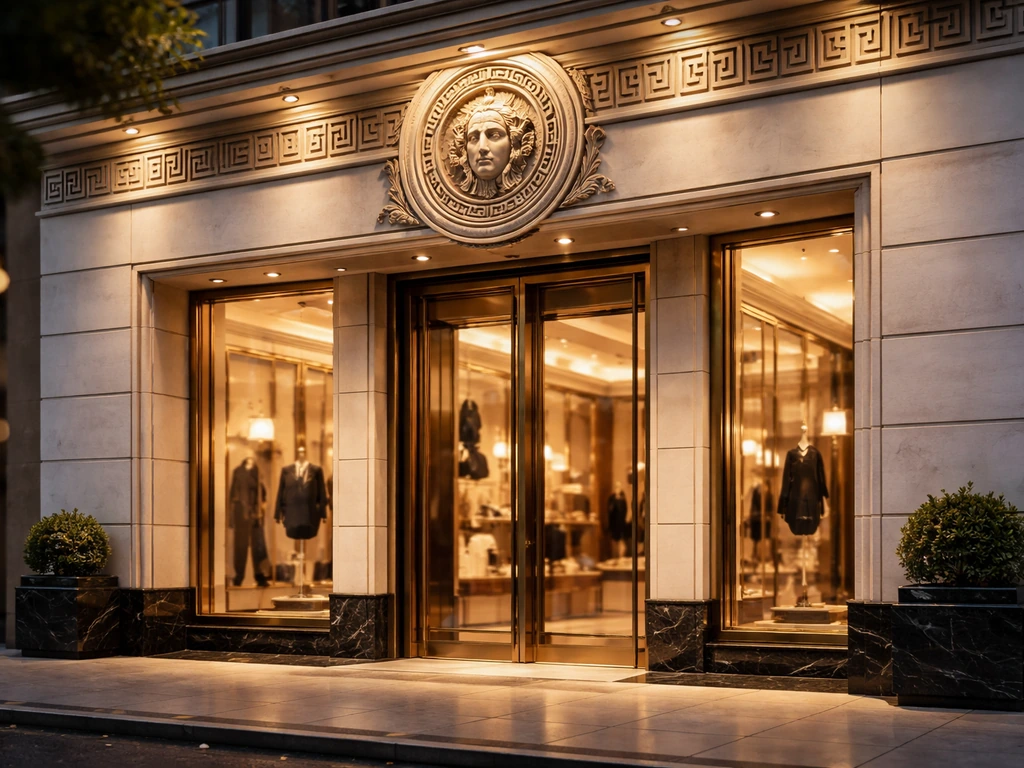
What 'Versace net worth' actually means (brand vs. family vs. owner)

The confusion around this search is understandable. 'Versace' is both a surname and a brand, and those two things have been financially intertwined since Gianni Versace founded the house in 1978. But they are not the same thing financially, and conflating them leads to wildly different numbers depending on the source.
The Versace brand net worth (or brand valuation) refers to the enterprise value of Versace S.r.l. as a business: its revenues, operating profit, assets, intellectual property, and what a buyer would pay to acquire it. This is the most concrete number available, especially now that an actual transaction has taken place. The Versace family net worth refers to what individual family members, mainly Donatella Versace and her brother Santo Versace, have personally accumulated, including equity stakes, real estate, and other personal assets. And the 'owner net worth' shifts depending on who holds equity at a given moment, because Versace has changed corporate hands more than once.
As of April 2026, the most reliable anchor for any Versace valuation conversation is the completed acquisition by Prada Group, which closed on December 2, 2025. ANSA reported on April 10, 2025 that Prada’s agreement provides for acquisition of 100% of Versace for an enterprise value of €1.25 billion on a cash-free and debt-free basis the completed acquisition by Prada Group. That deal sets a real market price for the Versace business and gives us the cleanest starting point.
The current net worth estimate and how we get there
The Versace brand's enterprise value is $1.375 billion (approximately €1.25 billion), as established by the Prada Group acquisition completed on December 2, 2025. This is not a speculative valuation or an analyst estimate: it is the actual cash price Prada S.p.A. paid Capri Holdings for 100% of Versace, on a debt- and cash-free basis, subject to certain closing adjustments. Prada announced the deal on April 10, 2025, and Capri Holdings confirmed completion in a press release dated December 2, 2025. That figure is the most defensible net worth estimate for the Versace brand available today.
It is worth being precise about the currency conversion. Prada's original press release quoted the enterprise value as €1.25 billion. At the EUR/USD exchange rate of approximately 1.098 used in Prada's investor presentation as of April 10, 2025, that converts to roughly $1.375 billion, which is the figure Capri Holdings confirmed in USD terms at closing. Both figures refer to the same transaction.
At the individual level, Donatella Versace's personal net worth is estimated in the range of $100 million to $200 million by various financial tracking sources, based on her salary, residual equity considerations from the Capri Holdings era, and her personal real estate holdings. Santo Versace, who served in executive and board roles over the years, has a smaller publicly traceable footprint. These are estimates, not verified figures from public filings, and they should be treated accordingly.
Where Versace's wealth actually comes from

Versace is a full-price luxury fashion house, and its revenue model has several distinct layers. Understanding those layers is what lets you evaluate whether a given brand valuation is reasonable.
Ready-to-wear, accessories, and direct retail
The core of Versace's business is its ready-to-wear collections and accessories, sold through its own boutiques globally and through high-end department store partnerships. During Capri Holdings' ownership, Versace was reported to generate roughly $800 million to $900 million in annual revenue in its stronger years, though growth stalled and revenues came under pressure in the mid-2020s. Versace operates flagship stores in key luxury markets including Milan, New York, Paris, and key Asian cities. Direct-to-consumer retail carries better margins than wholesale, so the brand's mix of owned boutiques vs. department store presence directly affects profitability.
Licensing and royalties

Versace has historically maintained a licensing business, particularly for categories like eyewear, fragrance, and home goods, that generates royalty income separate from its core fashion revenues. Fragrance licensing, in particular, has been a significant revenue stream for decades. Versace fragrances (including Eros, Bright Crystal, and Dylan Blue) are widely distributed through mass-premium channels, meaning they reach consumers at a much broader scale than the runway collections. This royalty income is relatively high-margin and adds a stable baseline to what would otherwise be a more volatile fashion revenue picture.
Brand equity and intellectual property
The Versace name, the Medusa head logo, the Greek key (Greca) pattern, and the overall brand identity are intellectual property with significant standalone value. Luxury brand valuations assign a premium to this intangible value, which is why a house like Versace can command an enterprise value well above a simple multiple of its current operating profit. When revenues are under pressure, as they were in the early-to-mid 2020s, the brand IP value acts as a floor on valuation because a buyer is also acquiring the repositioning potential.
Who actually owns Versace now and why that matters for the numbers
Ownership structure is the single biggest factor in determining which 'Versace net worth' figure is relevant to a given reader. Here is how the ownership has evolved and where it stands today.
| Period | Owner | Structure | Relevance to Net Worth |
|---|---|---|---|
| 1978–1997 | Gianni Versace (founder) | Private, family-held | Brand value entirely private; no public valuation |
| 1997–2014 | Versace family (Donatella, Santo, Allegra) | Private, family-held; Allegra held ~50% | Still private; Bloomberg estimated ~$1B range in this era |
| 2014–2018 | Blackstone Group (20% stake) | Partial private equity; family retained majority | First institutional valuation anchor |
| 2018–2025 | Capri Holdings (100%) | Publicly traded parent (NYSE: CPRI) | Versace financials reported in public SEC filings |
| Dec 2025–present | Prada Group (100%) | Subsidiary of Prada S.p.A. (Milan: 1913.HK) | Enterprise value confirmed at $1.375B at acquisition |
The current owner of Versace is Prada Group, which acquired 100% of the brand from Capri Holdings. Prada Group announced the agreement to acquire 100% of Versace from Capri Holdings for an enterprise value of €1. 25 billion (with the press release also citing $1. 375 billion) [Prada Group acquired 100% of the brand from Capri Holdings](https://www.
pradagroup. com/en/news-media/press-releases-documents/2025/25-04-10-prada-group-versace. html). Donatella Versace has continued in her role as Chief Creative Officer (not as an equity owner) under the Prada structure.
The Versace family no longer holds equity in the fashion house. This means that when someone asks about the 'Versace owner net worth' today, they are really asking about Prada S. p. A.
and its principal shareholders (primarily the Prada and Bertelli families), not the Versace family. And when they ask about 'Donatella Versace net worth,' that is a personal wealth question separate from the brand valuation entirely. In a related vein, the “inventor of Viagra” is often searched alongside net worth figures, since his earnings can be discussed separately from brand valuations.
Asset portfolio: what the brand and the family actually hold
At the brand level
As a Prada subsidiary, Versace's corporate assets now sit on Prada Group's consolidated balance sheet. These include the global boutique network (leased retail locations across major luxury shopping districts), inventory, intellectual property, the Versace archives (which have cultural and commercial value), and production and design infrastructure in Italy. The brand's real estate footprint is largely leased rather than owned outright, which is typical for luxury retail.
At the individual (Donatella Versace) level
Donatella Versace's personal asset base, based on public reporting over the years, has included significant real estate holdings. She has owned properties in Milan and had a long-documented connection to a villa on Lake Como. She is also known for personal art collecting, which is a common wealth vehicle among high-profile figures in the fashion world. Her salary and compensation as Chief Creative Officer under Capri Holdings and now Prada are not publicly disclosed in granular detail, but a creative director of her profile at a major luxury house typically commands compensation in the multi-million-dollar annual range. These personal holdings are entirely separate from the brand's enterprise value.
The wealth timeline: how Versace got here
Versace's financial history is not a straight line. It involves a founding boom, a crisis, a family-led revival, and two successive corporate acquisitions. Each phase changed both the brand's value and the financial picture for the people associated with it.
- 1978: Gianni Versace founds Gianni Versace S.p.A. in Milan. The brand grows quickly through the 1980s, becoming synonymous with bold, sexualized luxury and celebrity dressing. By the early 1990s it is one of the most recognizable fashion houses in the world.
- 1997: Gianni Versace is murdered outside his Miami Beach mansion. Ownership passes to his sister Donatella and brother Santo, with his niece Allegra Versace Beck (Donatella's daughter) inheriting a reported 50% stake under Gianni's will. The brand faces an immediate existential question about its future.
- Late 1990s–2000s: Donatella takes over as creative director and stabilizes the brand creatively, though the business faces financial strain. The company is reported to have had significant losses in certain years during this transition period.
- 2014: Blackstone Group acquires a 20% stake in Versace, valuing the company at approximately €1 billion at the time. This is the first major third-party institutional valuation of the brand and signals a path toward a broader capital raise or IPO.
- 2018: Michael Kors Holdings (renamed Capri Holdings) acquires Versace for approximately $2.12 billion, including debt. This is the peak transaction price for Versace and reflects the brand's strong positioning at that moment. Versace becomes part of Capri's multi-brand luxury portfolio alongside Jimmy Choo.
- 2019–2024: Under Capri Holdings, Versace reports revenues in the $800M–$900M range in peak years but faces brand repositioning challenges and broader luxury market headwinds. Capri's overall stock performance is pressured, and its multi-brand strategy comes under scrutiny from investors.
- April 10, 2025: Prada Group announces it has agreed to acquire Versace from Capri Holdings for an enterprise value of €1.25 billion ($1.375 billion).
- December 2, 2025: Capri Holdings confirms the sale of Versace to Prada S.p.A. is complete at $1.375 billion in cash. Versace becomes a Prada Group subsidiary.
One notable detail in the timeline: the 2025 sale price of $1. 375 billion is materially lower than the $2. 12 billion Capri paid in 2018. That gap reflects both the general compression in luxury brand valuations that characterized the mid-2020s and the specific challenges Versace faced in growing revenues under Capri's ownership.
The decline in transaction price is not unusual in fashion M&A, but it is a data point worth noting when assessing how brand value can move over time. In the r/news discussion about Prada Group buying Versace, readers also interpret the decline in transaction price when comparing valuation multiples and timelines across deals.
For context, readers interested in how other luxury-adjacent brands and designers have built and navigated wealth may find it useful to look at profiles of figures like Virgil Abloh, whose brand building at Off-White followed a different but similarly acquisition-driven arc. For example, profiles of Virgil Abloh’s brand building at Off-White can help you compare how acquisition-driven arcs can shape a creator’s wealth over time.
If you are comparing designer wealth side-by-side, you may also want to review Off-White and Virgil Abloh net worth estimates as a related wealth model. You can also find an estimate of the inventor of Viagra net worth to understand how patent-driven wealth differs from fashion-brand transactions. Virgil Abloh net worth estimates, by contrast, are typically discussed as the personal wealth side of the story rather than a brand transaction value.
How reliable is the $1.375 billion figure, and what are the limits?
The $1.375 billion enterprise value is about as reliable as a net worth figure gets for a private fashion brand, because it comes from an arms-length transaction between two major public companies, confirmed by press releases from both parties and reflected in Capri Holdings' SEC filings. There is no guesswork in the transaction price itself.
That said, enterprise value and net worth are not perfectly interchangeable. Enterprise value includes the business's debt and excludes its cash (the deal was on a 'debt- and cash-free basis'), so the equity value to the seller depends on the actual debt and cash balances at closing, subject to the adjustment mechanisms in the purchase agreement. For most practical purposes, $1.375 billion is the right working figure for 'what is Versace worth as a business.'
Where the numbers get murkier is at the individual level. Estimates of Donatella Versace's personal net worth range from under $100 million to over $200 million depending on the source, and none of those figures are backed by public disclosures comparable to what you get from SEC filings. Celebrity net worth sites often use different methodologies, different assumptions about real estate values, and different estimates of compensation. The honest answer is that her personal net worth is somewhere in the $100 million to $200 million range and that the variance in that estimate reflects genuine uncertainty, not sloppy sourcing.
A related search worth being aware of: 'Versace net worth at death' typically refers to Gianni Versace's estate at the time of his 1997 murder, which is a historically separate figure from the brand's current value. For background on how to interpret this figure, see the section explaining the difference between brand valuation, family wealth, and the current owner’s net worth Versace net worth at death. That number reflects a different era's brand valuation and personal asset base, and conflating it with today's figures would be misleading.
What to check and when to revisit
Because Versace is now a subsidiary of Prada Group, its standalone financials will no longer be reported publicly in the way they were under Capri Holdings. Prada may disclose Versace's revenue contribution in segment reporting, but a separate enterprise valuation will not be available until another transaction occurs. To stay current, the most useful sources to monitor are Prada Group's investor relations filings (Prada is listed on the Hong Kong Stock Exchange), any press coverage of Versace's revenue performance within Prada's results, and credible business journalism from outlets covering luxury fashion M&A. For individual net worth, revisit estimates periodically but treat any specific number with appropriate skepticism unless it is tied to a disclosed equity transaction or public filing.
- Brand enterprise value: $1.375 billion, confirmed by the Prada-Capri transaction completed December 2, 2025. This is the most defensible figure available.
- Donatella Versace personal net worth: estimated $100M–$200M based on aggregated public reporting; not verifiable from public filings.
- Current owner: Prada Group (100% equity). The Versace family no longer holds equity in the brand.
- Revenue baseline during Capri Holdings era: approximately $800M–$900M annually in stronger periods.
- Key caveat: the 2025 transaction price ($1.375B) is significantly below the 2018 acquisition price ($2.12B), reflecting market conditions and brand performance during that ownership period.
- For ongoing tracking: monitor Prada Group investor filings (HKEX: 1913) for Versace segment disclosures post-acquisition.
FAQ
When I search “versace net worth,” which number should I trust, the brand value or the owner’s wealth?
It depends what you mean by “net worth.” For the brand, use the transaction-based enterprise value from the Prada-Capri deal (debt- and cash-free basis). For the current owner, you have to look at Prada S.p.A.’s balance sheet and principal shareholders, because the Versace family no longer owns equity in the fashion house.
Why does the Versace deal price (enterprise value) not equal the owner’s net worth?
Enterprise value (EV) is not the same as equity value. EV includes assumed debt and excludes cash, so if you want a seller-side equity number you must apply the deal’s closing adjustments for actual cash and debt at completion. The article’s $1.375B figure is the right working EV, but not automatically an “owner equity” figure.
Do changes in Versace revenue or fashion news directly change Donatella Versace’s net worth?
Donatella’s public wealth estimates can move based on assumptions about her real estate and any remaining private holdings, not on brand performance. If she is not an equity holder in Versace under Prada, then day-to-day brand headlines generally do not translate into measurable changes in her net worth.
How can I tell if a “Versace net worth” website number is just a guess?
If you see a “Versace net worth” number that is much higher or lower than the deal EV, check whether the source is doing an analyst-style multiple on revenue or earnings, or is mistakenly using family wealth/estate figures. A quick decision rule, if the figure is not tied to a specific transaction or filing-based method, it is likely a model estimate rather than a market price.
Is “Versace net worth at death” comparable to today’s Versace brand value?
“Versace net worth at death” refers to Gianni Versace’s estate in 1997, which reflects a different company structure and a different brand valuation era. It does not represent today’s enterprise value of Versace S.r.l. under Prada, so comparing the two directly is usually misleading.
Why does Versace’s valuation not behave like a real estate-heavy company’s valuation?
Because Versace’s retail footprint is largely leased, a big part of the firm’s value is not land or owned buildings, it is the brand IP, inventory/working capital, and the operating platform (boutiques, distribution, design and production infrastructure). When sources focus only on tangible assets, they tend to understate the valuation logic.
How do I estimate “Versace owner net worth” now that Versace is owned by Prada?
If you are trying to estimate “Versace owner net worth” right now, focus on Prada S.p.A. financial disclosures and large shareholder stakes rather than Versace-specific revenue. Your result will still be approximate because “net worth” for a public company depends on market price, not only book value.
Do Versace’s fragrance and licensing revenues mean the brand valuation should be higher?
Licensing and royalties can matter, but they do not automatically imply a higher enterprise value if fashion sales are weak. Buyers will net out margin quality, growth expectations, and durability of royalties versus the costs and risk in core apparel, so a revenue headline alone is not enough.
If Versace is no longer separately reported, what should I use to track its value over time?
If standalone reporting disappears, you will not get an easy “Versace profit” line item like in the Capri era. The practical workaround is to use Prada’s segment reporting and any disclosed contribution metrics, then treat any “Versace net worth” number as a secondary inference until another transaction occurs.
Why do euro-to-dollar conversions for Versace “net worth” sometimes conflict across sources?
When you see a number quoted in euros and dollars, verify whether it is EV or equity value and whether the conversion uses the same exchange rate as the original announcement. A mismatch in currency rate or value definition can create the illusion of a discrepancy even when the underlying figure is identical.