Quick answer: Sonny Vaccaro's net worth estimate today
Sonny Vaccaro's net worth is most credibly estimated in the range of $10 million to $20 million as of 2026, based on a synthesis of his decades-long career earnings in sports marketing, consulting fees, and his well-documented role in landmark Nike, Adidas, and Reebok contracts. That range is an informed estimate built from public financial signals, not a hard audited figure. If you've searched 'Sonny Vaccaro net worth Forbes' hoping to find a verified Forbes list entry or a published Forbes profile with a specific number, you won't find one. As of today, Forbes has not published a verifiable standalone net worth figure for Vaccaro. Some third-party sites claim 'Forbes says' a particular number, but when you trace those claims back, there is no underlying Forbes source. Treat any figure attributed to Forbes for Vaccaro with serious skepticism.
Who Sonny Vaccaro is and why his wealth is tied to sports marketing

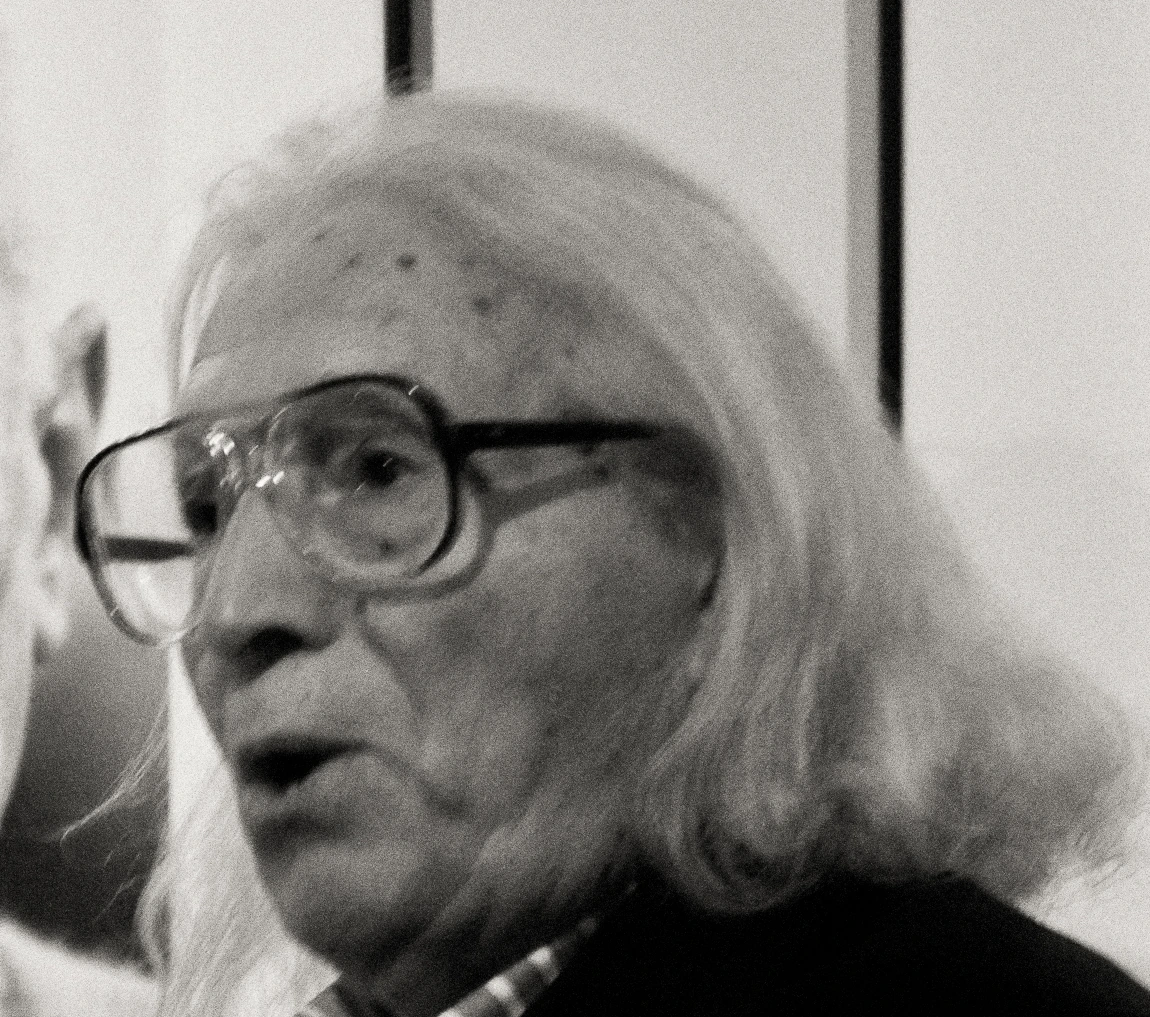
Sonny Vaccaro, born John Paul Vincent Vaccaro in 1939, is one of the most consequential figures in the history of sports marketing, though he has never been a celebrity in the conventional sense. He built his reputation not as an athlete or a coach, but as the architect behind some of the most valuable athlete endorsement deals ever struck. His name is permanently attached to the moment in 1984 when he convinced Nike to sign a then-rookie Michael Jordan to a $2.5 million endorsement contract that would eventually become Air Jordan and reshape the entire sneaker industry.
That's the core of why Vaccaro's wealth matters: sports marketing in the 1980s through 2000s was a lever that moved enormous amounts of money, and Vaccaro sat at the lever longer than almost anyone. He didn't own the companies. He wasn't on the court. But he was the connector, the scout, the negotiator who told Nike which college basketball programs to sponsor and which players to pursue. That role, repeated across Nike, Adidas, and Reebok over more than three decades, generated substantial compensation, relationships, and influence that translate directly into wealth accumulation.
Where his money actually comes from
Career salary and executive compensation
Vaccaro's primary income for most of his career came from his salaried and consulting roles at the three biggest sneaker companies in the world. At Nike, where he worked from the early 1980s until 1991, he was instrumental in shaping the company's basketball marketing strategy at a time when the brand was still finding its identity. After leaving Nike, he moved to Adidas in 1991 and spent a decade there, signing Kobe Bryant, Tracy McGrady, and Tim Duncan, among others. In 2002, he joined Reebok, where he continued in a senior marketing capacity until his retirement around 2007. Executive-level compensation at major global consumer brands for someone in his role would reasonably have ranged from several hundred thousand to over a million dollars annually at peak, plus bonuses tied to deal outcomes.
Consulting income and post-retirement work

After retiring from full-time brand work, Vaccaro didn't fade out. He became deeply involved in the legal and political fight for college athlete compensation, positioning himself as a central voice in the argument against the NCAA's amateurism model. He was a key witness and advocate in the O'Bannon v. AppliedAntitrust.com’s O'Bannon v. NCAA case study docket sheet provides procedural context and related documents that can help locate materials involving witnesses such as Vaccaro blank" rel="noopener noreferrer">O'Bannon v. NCAA antitrust case. In coverage of the O'Bannon litigation, CBS Sports reported that the NCAA filed testimony/deposition excerpts and referenced Sonny Vaccaro among the witnesses and depositions NCAA files testimony from Oscar Robertson, Bill Russell. NCAA antitrust case and has continued consulting and speaking in the advocacy space. While this work is driven more by conviction than revenue, it has kept him in the public sphere, generating speaking fees and advisory relationships that contribute modestly to ongoing income.
Licensing, brand ties, and the Air Jordan legacy
Vaccaro has spoken publicly about the fact that he does not receive royalties from the Air Jordan line despite brokering the original deal. That's an important clarification: his compensation was as an employee and executive, not as a partner with an ownership stake in the Jordan Brand. So while he catalyzed a business that generates over $5 billion annually for Nike, his personal financial benefit from that specific legacy is indirect, coming through his reputation and career trajectory rather than ongoing licensing income.
Investments and real estate
Vaccaro's investment portfolio is not publicly documented in detail. There are no known public filings, press releases, or reported equity stakes in major companies. Given his career timeline and the compensation levels involved, it is reasonable to estimate he accumulated and invested a portion of his earnings in conventional vehicles like real estate and diversified portfolios, which is common among executives at his career level. But unlike some sports business figures who became venture investors or startup founders, Vaccaro's post-retirement public persona is focused on advocacy, not entrepreneurship.
The data behind the estimate
Estimating Vaccaro's net worth responsibly means being transparent about what sources actually exist. There are no public tax returns, no SEC filings (he was never a public-company executive in a reportable capacity), and no court-ordered financial disclosures. What does exist is a substantial body of reported journalism, including long-form profiles in outlets like ESPN, Sports Illustrated, and The New York Times, interviews where Vaccaro himself has spoken about his career and, occasionally, his financial arrangements, documented contract values for the deals he brokered (especially the Jordan deal), and industry compensation benchmarks for senior marketing executives at companies like Nike and Adidas during those decades. Combining reported earnings ranges, industry norms, and career longevity, the $10 million to $20 million estimate is defensible, with the midpoint around $15 million being a reasonable working figure. It could be higher if private investments have performed well; it could be lower if lifestyle spending and the years since his last full-time role have drawn down assets.
How his fortune grew: a timeline
| Period | Role / Event | Financial Significance |
|---|
| Late 1960s–1970s | Dapper Dan All-American Classic (founded) | Established national recruiting network; limited direct income but enormous industry leverage built |
| Early 1980s–1991 | Nike basketball marketing executive | Orchestrated the Michael Jordan signing in 1984; growing executive salary, bonuses tied to Jordan Brand's early success |
| 1991–2002 | Adidas executive | Signed Kobe Bryant, Tracy McGrady, Tim Duncan; peak earning years with senior-level compensation at a global brand |
| 2002–2007 | Reebok senior marketing role | Final major corporate chapter; continued executive compensation, final accumulation phase before retirement |
| 2007–present | Retirement, advocacy, consulting | No major corporate salary; speaking fees, modest consulting; public profile sustained by NCAA reform advocacy and the film Air (2023) |
The 2023 Sony/Amazon film 'Air,' which dramatized the story of the Jordan deal and prominently featured a fictionalized version of Vaccaro (played by Matt Damon), renewed public interest in his story significantly. While the film's release didn't generate direct income for Vaccaro unless he had a consulting or advisory arrangement with the production, it lifted his public profile and likely increased the value of speaking engagements and media appearances.
Why estimates differ and how reliable this one is
If you've seen different figures for Vaccaro's net worth across various websites, the most common reasons are: some sites simply copy each other without tracing numbers back to a primary source, different sites use different estimation methodologies (some based purely on reported salary ranges, others including speculative investment values), figures go stale quickly when sites aren't regularly updated, and private assets like real estate, brokerage accounts, or equity stakes simply can't be independently verified. As noted at the top, the Forbes attribution that circulates online for Vaccaro does not trace back to an actual Forbes publication. That's a meaningful flag. When a net worth figure online says 'according to Forbes' but no Forbes URL or article backs it up, you're looking at a secondary claim repeated across sites, not a primary source.
For comparison, it can be useful to look at figures in adjacent spaces. Jimmy Vaccaro's net worth offers an interesting parallel case since Jimmy, a prominent Las Vegas oddsmaker, is another figure whose wealth stems from decades of industry expertise rather than public company ownership, which creates similar estimation challenges. Across the Vaccaro name in sports and entertainment, the pattern holds: careers built on expertise and relationships rather than equity tend to produce solid but harder-to-verify wealth estimates.
For public figures where Forbes does publish a figure, it's worth understanding what that number actually represents. Forbes typically builds its estimates from public filings, reported transactions, and analyst input, but it explicitly states that its figures are estimates. They can lag reality by 12 to 18 months depending on update cycles, they often don't capture private real estate fully, and they can miss offshore holdings, trust structures, or privately held business stakes. For a figure like Vaccaro, who has never had publicly traded equity or filed any public financial disclosures, even a hypothetical Forbes estimate would be working from the same limited signal set that any researcher would use.
How to verify this yourself and track updates

If you want to build the most accurate possible picture of Sonny Vaccaro's financial position, here is a practical approach you can take today:
- Search for long-form profiles in credible journalism outlets (ESPN, The Athletic, Sports Illustrated, The New York Times) and look specifically for any mentions of contract values, compensation arrangements, or Vaccaro's own statements about his finances.
- Look for any court case filings where Vaccaro appeared as a witness or consultant (the O'Bannon case is a key example) since court documents sometimes surface financial disclosures.
- Check property records in counties where Vaccaro is known to have lived, including Clark County in Nevada and Pittston, Pennsylvania. Real estate holdings are one of the few genuinely public financial signals for private individuals.
- Evaluate any 'net worth' figure you find by tracing it to a primary source. If a site says 'Forbes reports X' but doesn't link to a Forbes URL, treat the figure as unverified.
- Use industry compensation benchmarks for senior marketing executives at Nike, Adidas, and Reebok during the relevant decades to sanity-check salary-based estimates.
- Set a Google Alert for 'Sonny Vaccaro' to catch any new reporting, interviews, or business announcements that might update the financial picture.
It's also worth keeping perspective on what a net worth estimate is and isn't. It's a snapshot inference, not a bank balance. For someone like Vaccaro, who is now in his mid-80s and has been largely retired from major commercial work for nearly two decades, the figure is more historically interesting than forward-looking. The wealth he accumulated was built in a very specific window of sports marketing history, and it reflects the value of being the right person with the right instincts at the exact moment when athlete endorsements became the defining force in sports business.
If you're interested in how sports-adjacent figures accumulate wealth through expertise and connections rather than athletic performance, the profile of Kenny Vaccaro's net worth provides a useful contrast, showing how a former NFL safety built his financial position through contracts, endorsements, and post-career business activity in a completely different financial structure. And for a broader sense of how creative-industry professionals build lasting wealth through their craft and brand rather than corporate roles, Kenny Vasoli's net worth is another data point worth understanding in context.
The bottom line: Sonny Vaccaro's estimated net worth of $10 million to $20 million is reasonable, defensible, and built from legitimate public signals. Forbes has not published a verifiable figure. Any source claiming otherwise should be verified directly before you rely on it.