
The most commonly cited estimate for Otto von Habsburg's net worth sits around 100 million euros, with online sources ranging anywhere from roughly $63 million USD on the low end to $207 million USD on the high end. None of those figures come with audited financial statements or court-verified estate valuations, so treat them as informed estimates rather than confirmed totals. What we can say with reasonable confidence is that Otto's wealth, such as it was, came from a mix of earned income (writing, publishing, and decades as a Member of the European Parliament), institutional roles, and whatever remained of the Habsburg family's significantly diminished financial legacy after a century of exile, dispossession, and legal battles in Austria.
Otto von Habsburg Net Worth: Estimates, Sources, and Why They Vary

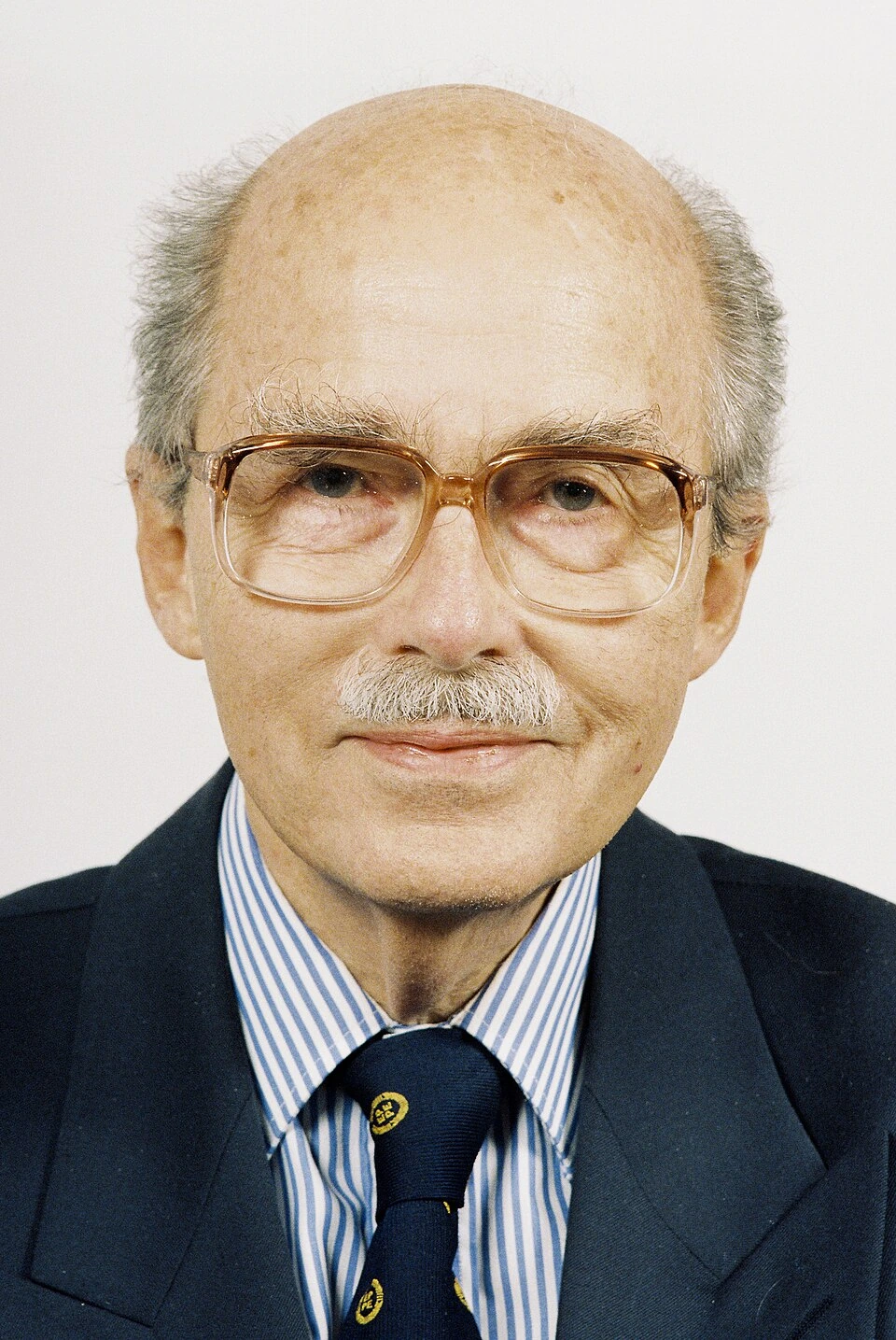
Who Otto von Habsburg was, and why his net worth searches get complicated

Otto von Habsburg (full name: Franz Joseph Otto Robert Maria Anton Karl Max Heinrich Sixtus Xaver Felix Renatus Ludwig Gaetan Pius Ignatius von Habsburg) was born on 20 November 1912 at Reichenau in Lower Austria and died on 4 July 2011. He was the eldest son of Charles I, the last Emperor of Austria and King of Hungary, and Empress Zita of Bourbon-Parma. That made him, in dynastic terms, the Habsburg pretender to the Austro-Hungarian imperial throne for most of the twentieth century. In practice, though, he spent the bulk of his adult life as a political activist, author, and later as a sitting Member of the European Parliament representing Bavaria's CSU party from 1979 to 1999.
The reason 'Otto von Habsburg net worth' searches produce such chaotic results comes down to a few overlapping problems. First, 'Habsburg wealth' as a concept carries enormous historical weight, so many casual sources anchor their estimates to the old empire's vast holdings rather than to what Otto personally controlled or earned. Second, searches routinely drift to other family members, most notably his daughter Gabriela von Habsburg, whose profile appears prominently in results. Third, there is a fully separate 'Otto von Habsburg Foundation' with publicly filed financials that sometimes gets conflated with personal wealth. And fourth, a small cluster of low-credibility net-worth aggregator sites simply copy or extrapolate from each other, producing the illusion of multiple independent data points when there is really just one guess echoed several times.
What the numbers actually look like, and where they come from
One EPF-linked publication explicitly documented the range: $63 million (from networthroom.com) to $207 million (from networthroll.com/blog2). A German-language site, dasvermoegen.com, pegs the figure at 'rund 100 Millionen Euro' without citing a primary financial document in the visible content. These three numbers basically bracket the online conversation. The 100 million euro figure feels like the rough midpoint that most researchers land on when they blend Otto's career earnings, the value of assets plausibly connected to the Habsburg name, and estimated foundation involvement. It is not a number derived from a will, a probate record, or an audited balance sheet, at least not in any version publicly accessible.
Why does the range span $63 million to $207 million? Largely because of methodological choices that different estimators make differently. Do you count the value of intellectual property and publishing rights? Do you include the estimated value of archival and historical materials? Do you attribute a share of the Habsburg family's collective holdings to Otto personally? Do you treat the foundation bearing his name as an extension of his personal wealth or as a separate entity? Each of those decisions can swing the total by tens of millions, and none of them have a definitively correct answer from public records.
Where Otto's money actually came from

Earned income: writing, publishing, and politics
The Paneuropa Union Germany, an organization closely tied to Otto's political legacy, has explicitly stated that he lived primarily from his work as a writer and publisher, and from his salary as an MEP, rather than from inherited capital or interest-bearing wealth. That is worth taking seriously as a framing narrative, though it comes from a partisan source and should not be read as a complete financial accounting. Otto authored dozens of books on European history and politics across several decades, and royalty income from a substantial bibliography can accumulate meaningfully over time. MEP salaries, while not lavish by billionaire standards, are verifiable: European Parliament rules set the base salary at 38.5% of a judge's basic salary at the Court of Justice, which today works out to roughly EUR 8,772 net per month. Otto served from 1979 to 1999, giving him two full decades of that income stream.
Habsburg family legacy and the limits of dynastic wealth

The story of Habsburg wealth in the twentieth century is largely a story of dispossession. The Habsburg Law of 3 April 1919 expelled the family from Austria and transferred their assets to the state. Property rights were partially restored in 1935 but withdrawn again in 1938 under Nazi rule. Otto spent decades in exile, and it was not until 1961 that he formally renounced membership in the House of Habsburg-Lorraine and his sovereign succession rights, in exchange for the right to return to Austria as a private citizen. Austria's position has consistently been that Habsburg descendants have no state entitlement to restitution, a point reinforced by legal proceedings as recently as the early 2000s. The upshot: whatever Habsburg-connected wealth Otto held was not the product of a clean dynastic inheritance but of a fragmented, legally contested, multi-decade process that almost certainly left the family with far less than the old empire's holdings would suggest.
A trend.at report does reference a restitution-adjacent valuation discussion that mentioned a total value in the vicinity of €200 million in the context of post-Otto Habsburg property matters, but this figure appears to relate to family-level claims and asset discussions, not to Otto's personal estate. That distinction matters a great deal when you are trying to pin down individual net worth.
Institutional roles and foundation connections
Otto was president of the International Paneuropean Union for many years and was deeply involved in European integration advocacy. These roles typically carry honoraria and expense allowances rather than substantial wealth-generating compensation. The Otto von Habsburg Foundation, established to preserve and promote his legacy, is a separate legal entity with its own publicly disclosed financials (including a 2024 Annual Report and Hungarian-language contract disclosures above threshold values). Foundation assets and activities belong to the foundation, not to Otto personally or his estate, so conflating them inflates personal net-worth estimates.
Asset breakdown: what he likely held and in what categories

Without a published estate inventory, any asset-level breakdown is necessarily approximate. Based on available reporting and the plausible sources of wealth described above, here is how the picture likely breaks down at a high level.
| Asset Category | Likely Form | Confidence Level |
|---|---|---|
| Real estate | Residential properties in Germany and Austria; possibly other European holdings accumulated over decades of residency | Low-medium (no public property registry summary available) |
| Intellectual property / publishing | Royalties and rights from an extensive catalog of books and articles on European politics and history | Medium (bibliography is well-documented; royalty values are not) |
| Investment / financial holdings | Conventional savings and investment accounts consistent with a long career of professional income; no public record of major equity stakes or business ventures | Low (no disclosed portfolio) |
| Foundation / institutional assets | The Otto von Habsburg Foundation holds assets independently; these are not personal holdings | High (foundation has public filings) |
| Habsburg archival / legacy materials | After his death, archival materials were moved to Hungary under a foundation framework, reportedly with involvement tied to political circles there (reported by FAZ and Süddeutsche Zeitung) | Medium (reported but values undisclosed) |
The archival point is worth elaborating on. Reports from FAZ and Süddeutsche Zeitung documented that Otto's estate materials and legacy archive were moved to Hungary after his death and placed under a private foundation framework, with connections to political figures in Budapest. This institutional custody of archival assets is significant for understanding his legacy but it does not translate cleanly into personal net-worth calculations since the materials are no longer straightforwardly a personal asset.
A timeline of events that shaped the wealth picture
- 1912: Born as heir to the Austro-Hungarian imperial throne, theoretically heir to one of Europe's most powerful dynasties.
- 1919: Habsburg Law enacted; family exiled from Austria and assets seized by the state. The dynastic wealth base is effectively severed from Otto's personal financial future.
- 1935-1938: Habsburg property rights partially restored under Austria's brief return to pre-exile arrangements, then lost again under Nazi annexation.
- 1950s-1960s: Otto builds a career as a political writer and Paneuropean activist, generating earned income through books, lectures, and advocacy roles.
- 1961: Otto formally renounces Habsburg succession rights, allowing return to Austria as a private citizen. This closes off any realistic dynastic claims while opening up a more stable professional life in Europe.
- 1979-1999: Serves as a Member of the European Parliament for Bavaria, providing two decades of steady, verifiable institutional salary income.
- Post-1999: Continues as a prolific author and public intellectual into his late 90s, adding to lifetime publishing income.
- 4 July 2011: Dies at age 98 in Pöcking, Bavaria. Estate and archive management becomes a post-death question, with materials eventually moving to Hungary under foundation arrangements documented by German-language journalism.
How to actually verify what you find online

If you want to do your own due diligence on Otto von Habsburg's net worth, here is what to actually look at and what to skip. If you see a separate “Stoffel Vandoorne net worth” estimate, treat it the same way: look for primary sources rather than copied aggregator numbers.
Sources worth consulting
- Otto von Habsburg Foundation annual reports and public-interest disclosures (available on the foundation's official site and its Hungarian-language counterpart): these give you verified numbers for the foundation, which you should then keep separate from personal estate figures.
- German and Austrian business registries: useful for checking whether Otto or his estate had registered company interests, though public records from his era of activity may be limited.
- Reputable obituaries and biographies: The Guardian's 2011 obituary and similar credible journalistic sources provide reliable biographical context without making up wealth figures.
- FAZ and Süddeutsche Zeitung reporting on the estate and archival transfer to Hungary: these are primary sources on what happened to his legacy materials post-death.
- Britannica and Wikipedia Habsburg Law / House of Habsburg-Lorraine articles: useful for understanding the legal context that limits any claim of straightforward dynastic inheritance.
- EU transparency resources on MEP income: verifiable salary benchmarks that can anchor income-based estimates for his parliamentary years.
Red flags to watch for
- Any site claiming a precise figure (especially in the $200 million+ range) without citing a will, probate record, or independently verified financial disclosure: the range itself in online sources ($63M to $207M) tells you these are guesses, not calculations.
- Results that are actually about Gabriela von Habsburg or other family members: Habsburg net-worth searches drift easily to other family members, so confirm you are reading about Otto specifically.
- Sites that conflate the Otto von Habsburg Foundation's assets with his personal net worth: the foundation is a separate legal entity.
- Any reference to a large Habsburg family fortune as if it flows directly to Otto's personal balance sheet: the 1919 and 1938 dispossessions, combined with the lack of Austrian restitution rights, make that narrative legally and historically inaccurate.
- Net-worth aggregator pages that show no methodology, no cited sources, and suspiciously round numbers: these are typically recycling a single unchecked estimate and should not be treated as independent confirmation.
The bottom line on the estimate
A personal net worth in the range of 50 to 100 million euros is the most defensible estimate given what is publicly known. If you are specifically trying to pin down Hugo Valenti net worth, the same verification issues apply and you should prioritize primary or audited records over copied estimates. It reflects lifetime earnings from a prolific writing career, two decades of MEP income, institutional roles and honoraria, and some degree of privately held real estate and financial assets accumulated over a very long and active life. It does not reflect a pristine dynastic inheritance, because that was largely severed by a combination of twentieth-century politics, legal dispossession, and exile. The higher figures circulating online (toward $200 million) are possible if you assume significant undisclosed real estate or that some family property settlements added substantially to his personal holdings, but there is no public documentation to confirm that. The lower figures (around $63 million) probably undercount the cumulative value of a decades-long professional career. The 100 million euro figure sits in a reasonable middle ground, though it remains an estimate until a verified estate record says otherwise. For a focused breakdown of that estimate, see the Hugo van Vredenburch net worth article. Readers researching similar figures in this space, including profiles like those of Axel Vervoordt or Stoffel Vandoorne, will recognize this pattern: the gap between what is reported and what is verifiable is often wide, and transparency about that gap is more useful than false precision.
FAQ
Is Otto von Habsburg’s net worth primarily inheritance money or income from his work?
Most of the defensible framing points to earned income (books, publishing work, and salary from serving as an MEP) rather than a clean inherited endowment, because major dynastic holdings were broken up by exile and legal dispossession. Any remaining wealth tied to the Habsburg name is better treated as contested or fragmented rather than straightforward inheritance.
Why do some results show about €200 million when the article mentions a more defensible 50 to 100 million euros range?
Higher numbers usually come from blending personal wealth with family-level claims or broadly “Habsburg-connected” asset discussions, not a verified personal estate inventory. If a figure is presented in the context of restitution or post-Otto property matters without separating who owned what legally, it is easy for estimators to over-attribute to Otto personally.
Do the Otto von Habsburg Foundation numbers count toward Otto’s personal net worth?
Not automatically. A foundation’s disclosed assets and contracts relate to the foundation entity, and those resources are not the same thing as Otto’s personal estate. Including foundation assets in personal net-worth calculations can inflate totals unless you can show a legal transfer or direct personal ownership.
How much should I trust net-worth aggregator sites for “otto von habsburg net worth”?
Treat them as starting points, not evidence. When multiple sites repeat the same figure range without adding primary documentation, the data points often trace back to one or two original guesses. A useful check is whether they show an underlying methodology (estate inventory, probate, audited statements) or just restate a prior estimate.
Could the value of archives, manuscripts, or historical materials be included in personal net worth?
In principle, yes, but in practice it is hard to quantify and often legally separated. The article notes legacy archive custody under a foundation framework, which makes it difficult to count those materials as personal assets with a clear market value.
What common mistake leads to confusing Otto’s net worth with family members like Gabriela von Habsburg?
Search results and writeups often mix “Habsburg wealth” narratives across multiple relatives. If the source does not explicitly distinguish Otto’s legal estate from other family members’ holdings, you may be looking at a family-level or sibling-level valuation rather than Otto’s personal net worth.
If Otto lived primarily from salary and writing, why do estimates still vary by tens of millions?
Because net-worth models differ on how to account for non-salary components, including intellectual property value, accumulated savings over decades, and any privately held real estate or financial assets. Even small changes in assumptions about ownership or included asset categories can swing totals substantially.
Is there any practical way to build your own estimate without audited records?
Yes, but you need a disciplined scope: model only categories you can justify (for example, documented MEP earnings for the income component, and then add narrowly defined asset categories only when there is credible evidence of ownership). Avoid “all Habsburg holdings” assumptions, and separate what belongs to foundations or legal entities from what belongs to Otto personally.
What does “net worth” mean here, market value vs. book value, and why does that matter?
Net worth in popular discussions is often treated as market value, but without valuations, estimators may use rough proxies or historical context. If you see a figure presented without clarifying whether it assumes sale prices, replacement costs, or accounting book values, expect the result to be highly assumption-driven.
Could Otto’s renunciation and the restitution disputes affect what can be counted as his estate?
Yes. Because key property rights were withdrawn, contested, or reorganized across time periods, legal status and ownership at death are crucial. If ownership was not clearly restored to Otto, then disputes and partial claims should not be automatically counted as assets in his personal estate calculations.